2026 · Founder · Product · AI Engineering
Thrink
Project management you run with your thumb. A team of AI agents runs the rest.
Thrink is what happens when you replace dashboards with a chat box and PMs with agents. Talk to it. It plans, drafts, schedules, escalates, and reports. The whole company fits in your pocket.
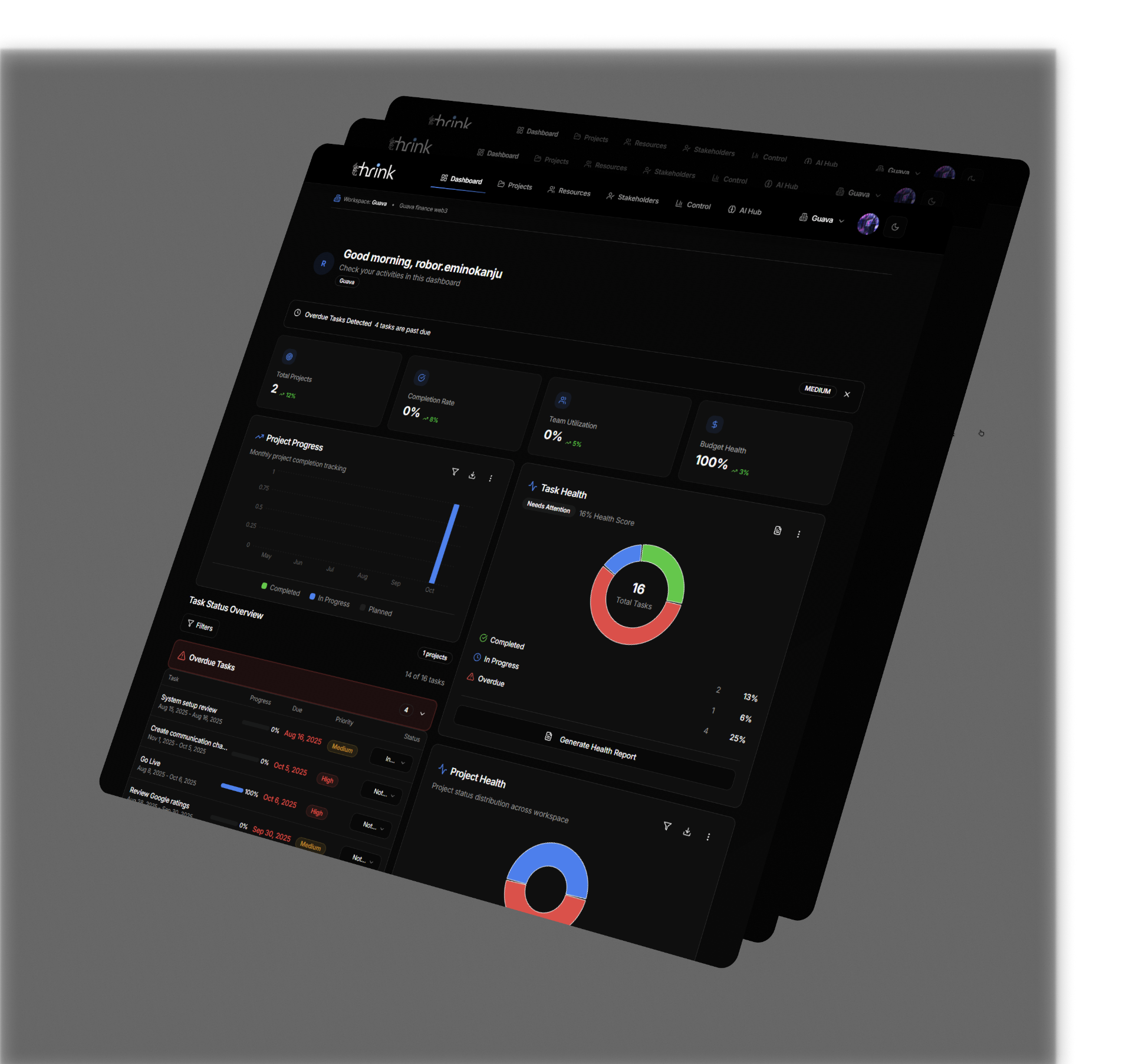
§01 — Case study
The shape of the work.
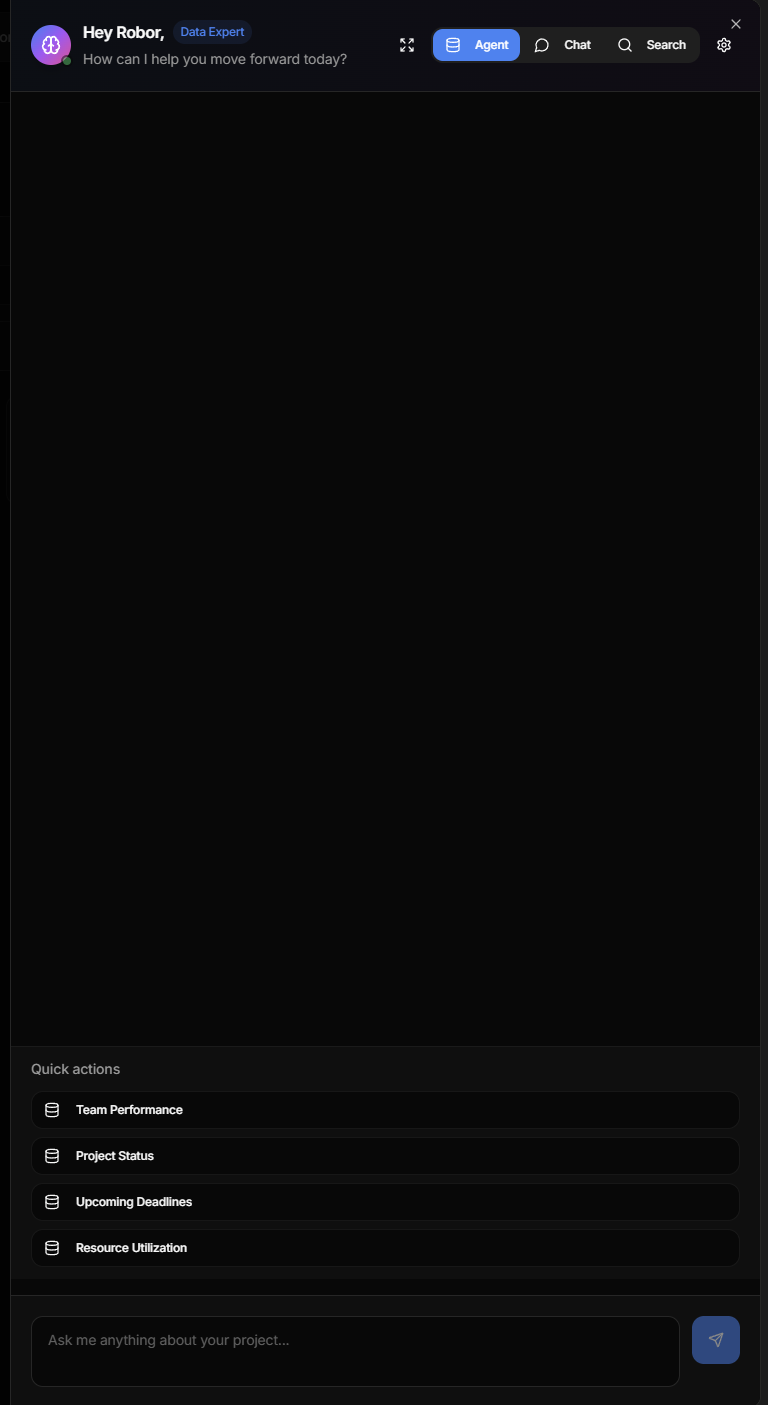
Project management is broken because PMs spend their day moving information, not making decisions. Thrink fixes that with one chat box and nine agents that do the moving for you.
Receipts — current traction
PMs don't manage projects. They translate them.
Slack to Jira. Jira to Notion. Notion to a status deck. Status deck to an email no one reads. The average PM touches 8 tools before lunch and ships zero decisions. Meanwhile the exec wants one number — am I making money on this portfolio? — and nobody can answer in under a week.
Replace the dashboard with a conversation.
If the AI already knows your projects, your budget, your team, and your blockers — why are you clicking through tabs to find them? Open Thrink, type "what's at risk this week and who do I email," and get the answer plus the draft email. That's the entire product thesis.
“The future of PM tools isn't a better dashboard. It's no dashboard.”
Nine specialists. Each one earns its keep.
Brief writes your morning standup. Risk watches CPI/SPI overnight and flags drift. Schedule rebaselines when reality moves. Budget tracks earned value and margin. Stakeholder drafts the email you were dreading. QA reviews the deliverable. Standup summarizes yesterday. Escalation routes the blocker. Specialist answers the deep technical question. They run in parallel, share context, and you talk to whichever one you need — by name.
Workspace for the team. System for the enterprise.
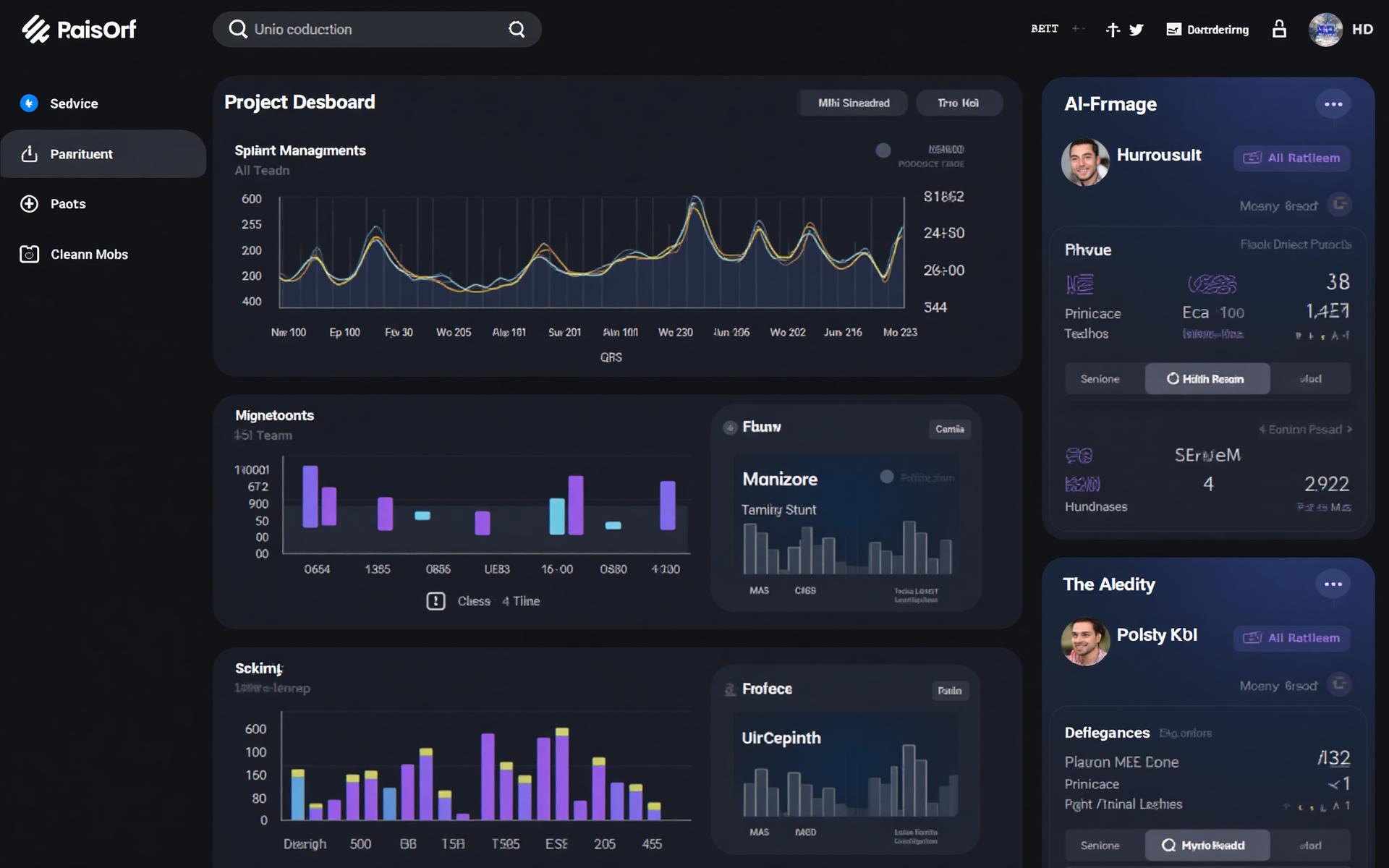
Workspace Mode is for the PM in the trenches: one team, one portfolio, agents that know your projects cold. System Mode is for the exec who owns 40 workspaces: enterprise-wide profit and loss, FX-normalized cost rollups, drift across every team. Same agents, same chat box, completely different altitude. Nobody else does both.
If it doesn't work one-handed, it doesn't work.
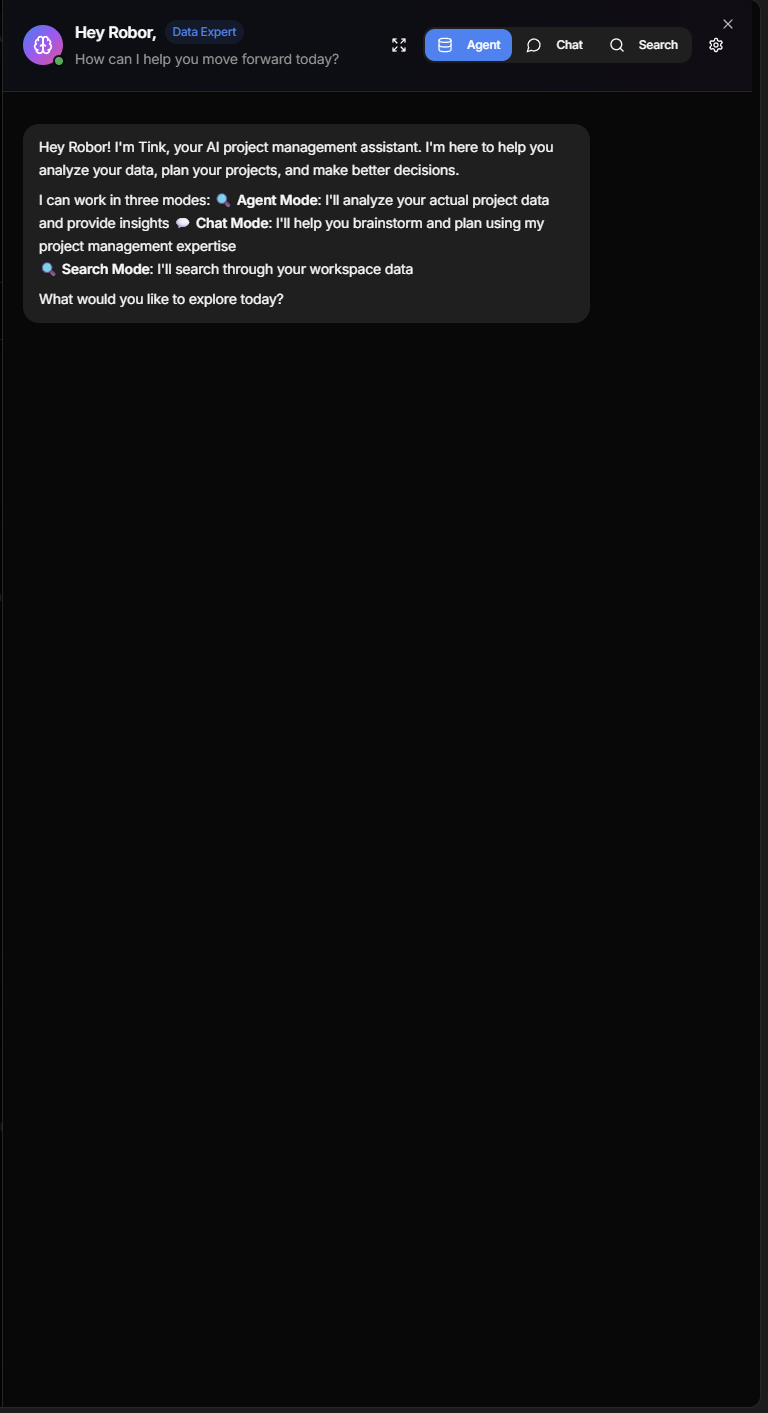
Tink, the mobile agent, is a PWA you install once and use forever. Standups happen in Ubers. Approvals happen at school pickup. Voice in the update, agent posts it, dependency pings legal, you never opened a laptop. The whole company runs from your home screen.
PMs run 3x more projects. Execs finally see the P&L.
The translation tax goes to zero. The agents do the moving. The chat box does the asking. PMs go home. CFOs get one number. The cockpit warns you about week-4 drift in week 2. That's what management was supposed to feel like.
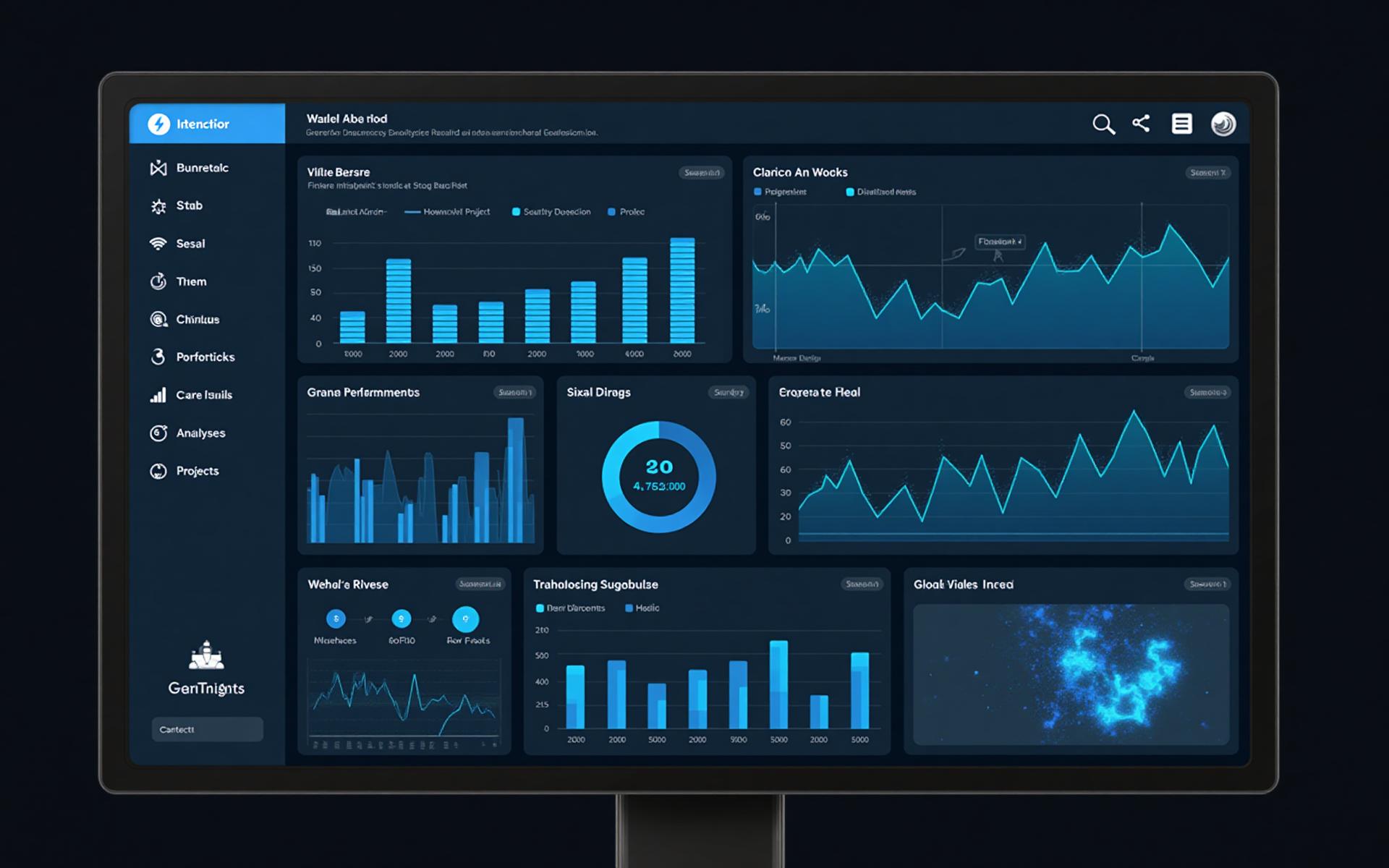
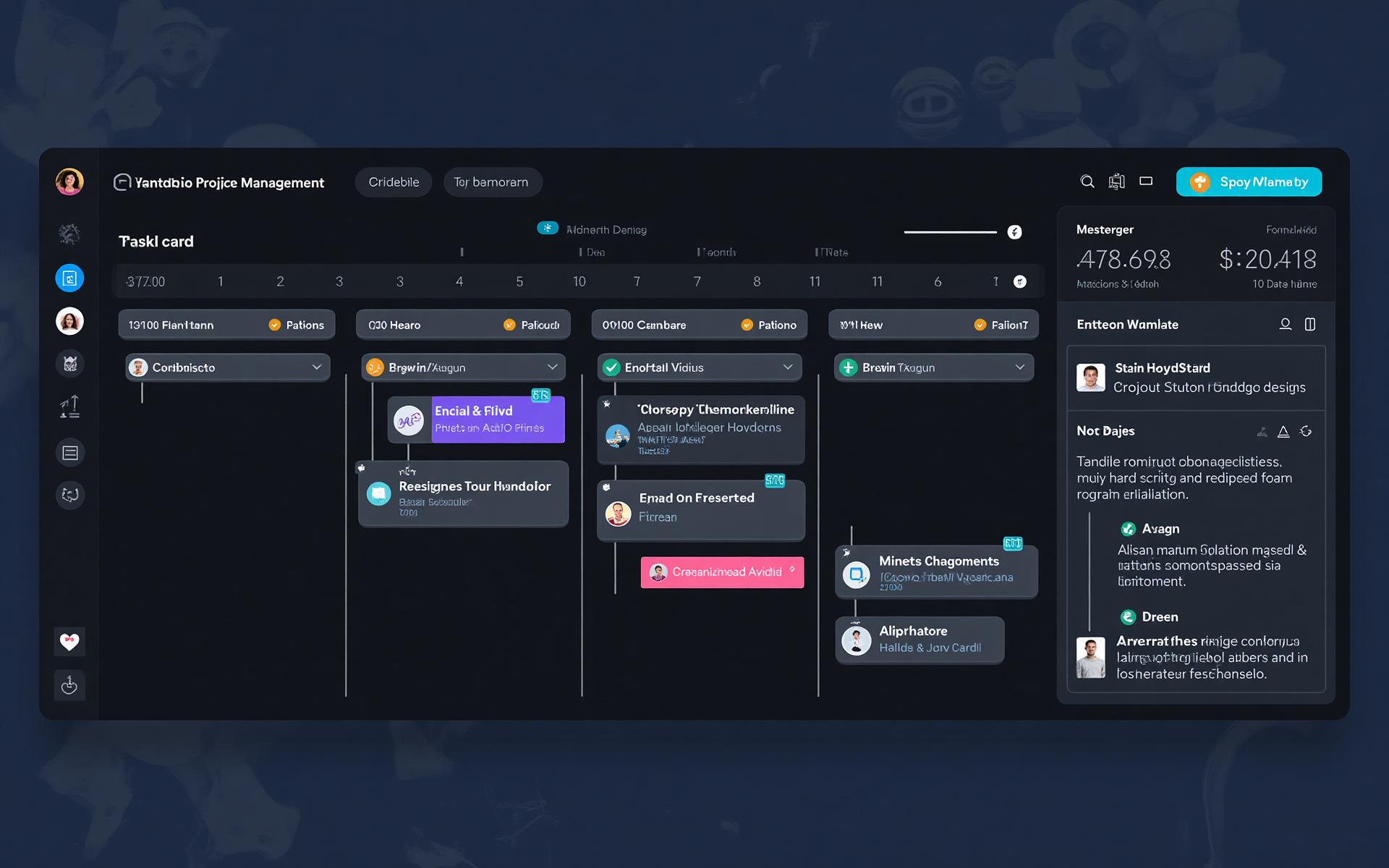
§01.5 — From the product



§02 — Story
Inception → Outcome
01 · Inception
PMs aren't managers — they're scribes.
Every PM I shadowed spent 70% of their week translating: Slack → Jira → Notion → email → status deck. The actual decision took 5 minutes. The translation took 5 days.
02 · Insight
The interface should be a conversation.
Stop building dashboards humans have to learn. Build agents that already know the project and answer in plain English. The chat box is the new sidebar.
03 · Architecture
Two modes, one brain.
Workspace Mode for the team in the trenches. System Mode for the exec who owns 40 workspaces. Same agents, different scope, normalized FX so a CFO sees one number.
04 · Mobile
Built for the thumb, not the laptop.
Standups happen in Ubers. Approvals happen at school pickup. The mobile app is the product — desktop is the export. Tink, the on-device agent, lives one tap from your home screen.
05 · Ship
Specialists, not a single super-agent.
Nine focused agents beat one bloated one. Brief writes the morning. Risk flags drift. Stakeholder drafts the email. Each one is small, sharp, and accountable.
06 · Outcome
From 8 tabs to one chat.
PMs run more projects with less time. Execs see profit and loss across the entire enterprise without opening a spreadsheet. The tool finally does the management.
§03 — Outcomes
run an entire portfolio from your phone — chat, tap, done
Brief, Risk, Schedule, Budget, Stakeholder, QA, Standup, Escalation, Specialist
two AI modes — one for your team, one for the whole enterprise
Next